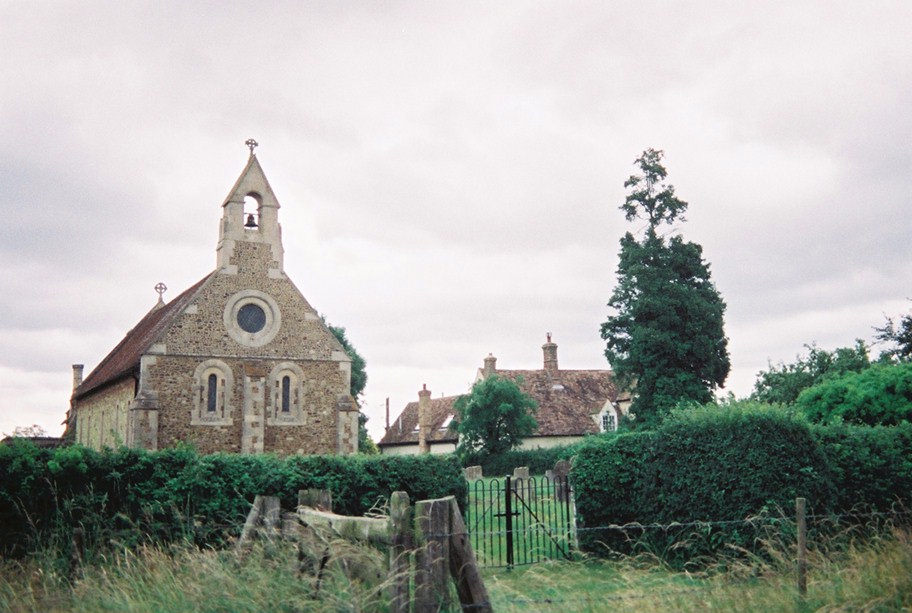
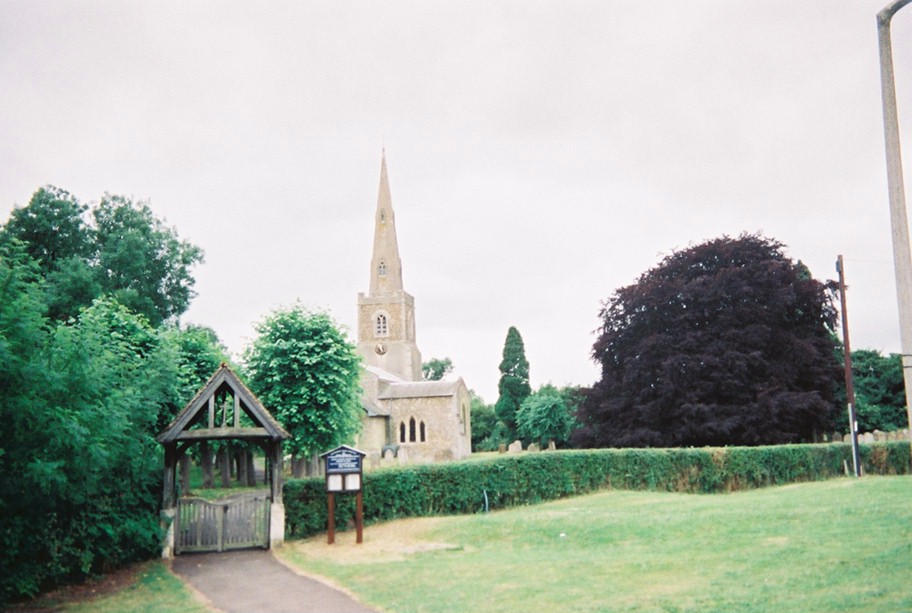
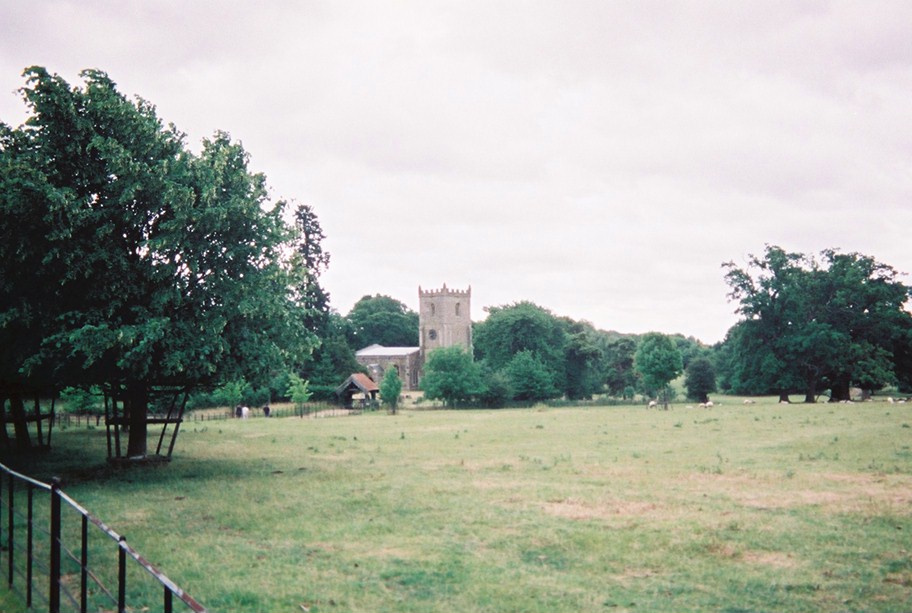
This part of Cambridgeshire has some very old and fine churches. They do not tend to be very large, as the agricultural land around here is mostly very heavy clay, and the area in the medieval period was not particularly wealthy.
There has been Christian presence in the area for far longer than the present churches suggest, even though a good number of them are seven or eight hundred years old. The oldest part of any church in the team must be the area of the chancel arch in St Michael's Toseland, where the capital has delightful carving from the late Saxon or early Norman period. St Helena and St Mary Bourn, a noble building with a curious twisted two-step spire, has a tower arch from the Norman period, though the nave with its alternating octagonal and round columns dates from a hundred years or so later.
Local abbeys were very powerful in this period, notably Ramsey and St Neots, and Elsworth Church benefited from the patronage of Ramsey. Caxton was a parish given by the King to the Dean and Canons of St George's Chapel Windsor at that eminent chapel's foundation - the connection endures and St George's are still their patrons.
Many medieval churches had highly coloured paintings on their walls to illustrate Christian truth to a largely illiterate populace. One fine late example (15C) of this art survives at All Saints and St Andrew's Kingston. Look out for the Wheel of Fortune on the north aisle wall and the rather sketchy remains of a soldier with a lance (possibly St George and the dragon?). St Pandionia and St John the Baptist Eltisley has retained a remarkable staircase that would have gone up to its rood loft, but now ends in empty space. St Pandionia, by the way, is a little known saint who was once Abbess at the Abbey which is now believed to be under the Rectory Garden in Eltisley.
Later periods have left their mark on the interiors of the churches, notable in Tudor and Jacobean pulpits, panelling and pews. The eighteenth century left a fine memorial statue in St Mary the Virgin Longstowe of a drowning man reaching up to the anchor that is Christ.
The largest wholesale Victorian reconstruction of a church is at St Mary the Virgin Longstowe. Ruined by the mid-eighteenth century, a nineteenth century rector retained the medieval tower, but reconstructed all the rest. It is a riot of polychromatic brickwork and tiling worthy of Keble College Oxford.